
Has Golf’s Rowdiest Open Gone Too Far?
Nick Reed
February 13, 2024

Ironically enough, professional golf’s “trashiest” tournament is sponsored by Waste Management. The WM Open concluded this past weekend in Phoenix, Arizona to mixed reviews from participants, as it seems like the culture of the event has snowballed out of control.
From the start of the tournament, things were not going smoothly. Round 1 was delayed for over three hours on Thursday due to rain, causing half of the players to not finish their initial round, setting up for a busy Fri/Sat/Sun of the already bustling Super Bowl Weekend. Repeating rain caused a delay for the first three rounds of the tournament, with players splitting their rounds on every day. From a player’s perspective, this doesn’t exactly make them joyous.
Playing on soggy, variable conditions and picking up 60% through yesterday’s round at 8:00 am sharp the next morning is one thing, but add crowd noise and heckling in the mix and players can be understandably frustrated. The Phoenix Open (now sponsored by Waste Management) has had a partying culture since it found its home at TPC Scottsdale in 1987, as younger golf fans from neighboring colleges were given more freedom by the PGA to cheer, boo, and everything in between. But when a fan fell from the 16th hole grandstands on Friday, people started to consider if things had gone too far.
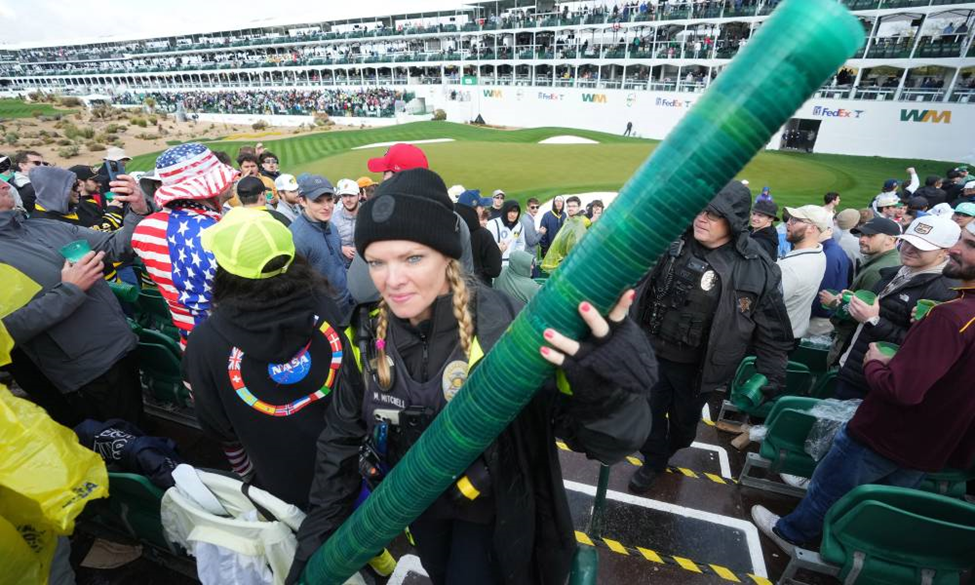
This year’s Open saw record attendance numbers on Saturday and Sunday, and crowds were roaring and drinking in abundance. The tournament had to halt alcohol sales on Saturday due to rowdy fans, as players were starting to become irritated. Notable golfers Zach Johnson and Jordan Spieth were at the forefront of the criticism coming from the golfers. Spieth, who had the third-best odds to win the tournament by sportsbooks, was the recipient of a shriek during his backswing on the 18th hole, which (understandably) set him over the edge. After some expletives from Spieth, he finished his fourth round in sixth place, which was seven strokes from the leaders.
Leaders Charley Hoffman and Nick Taylor managed to persist through the weather delays and crowd shenanigans to shoot a respectable 21 under par in their four rounds and went on to play a playoff that lasted until around 8pm EST (midway through the Super Bowl). 35-year-old Canadian Nick Taylor prevailed by one stroke to win his fourth TOUR title, ending one of the most memorable and contentious tournaments professional golf has seen in recent memory.
Golf, in essence, is a sport about respect. Respecting the course, respecting those who you play with, and respecting those who you watch play are all important facets of the sport. Yet, shutting down all rowdiness at the Phoenix Open would be too far, in my opinion. With other respectable tournaments like the Masters and the US Open staying calm and traditional, I do feel like there is a place for the Phoenix Open to be ‘trashier’ than those offerings. The WM Open brings ticket sales, media attention, and some players (that are playing well) enjoy the atmosphere. I think that both tournament officials/workers and fans must do better. Those operating the tournament must make it clear that those going beyond standard levels of booing, cheering, and drinking will be met with consequences, and fans need to understand those same rules.
This year was the first glimpse into what the tournament could become if not policed efficiently, and I hope that it can be reined in for the 2025 edition. Just as the tournament’s name suggests, there needs to be higher levels of Waste Management next year.
The Home Of Golf: A 2022 Preview of The Open
Dennis Weaver
July 13, 2022
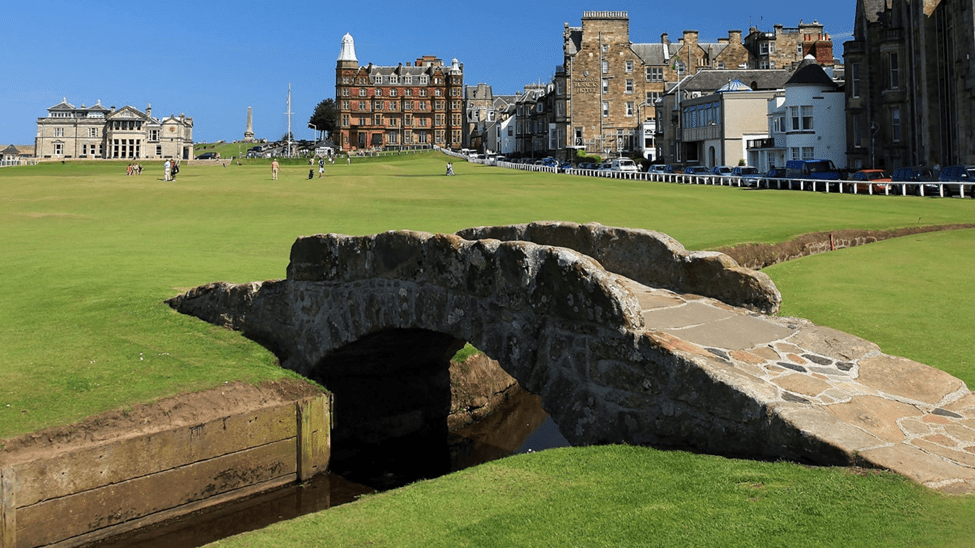
Image credit: David Cannon (pgatour.com)
There are few things in this world that you truly have to see to believe, the Grand Canyon, the Eiffel Tower maybe. But for golf fans, the top of that list has to be St. Andrews, a small town situated along the eastern seaboard of Scotland which serves as a present day salute to golf’s rich history and past. Home to the famous Old Course which has been in operation for more than 600 years, the regions heritage and history is, without question, deeply rooted in the game. It is thus only fitting that such an area has experience playing host to one of the most significant and historic events on golf’s annual calendar, The Open Championship (or as it is commonly referred to, simply “The Open” or “The British Open”). In fact, the tournament has taken place at St. Andrews a record 29 times, with the highly anticipated 150th playing of the event due to add another to the tally. This year in the midst of the firestorm and controversy that has been the PGA Tour vs. LIV golf battle for relevance, the game will once again descend upon one of the most historic and unifying places in golf, the Old Course at St. Andrews. And maybe, just maybe, it is exactly what golf needs.
To this day the Old Course continues to match golf history with near perfection. In contrast to the various “parkland” courses many of us in the States are used to, this historical “links” style track is built with wide open terrain, little in the way of trees or vegetation, narrow waterways, and most notably the deep (and occasionally enraging) pot bunkers that line nearly each and every hole. Incredibly, there are 110 bunkers scattered across the course, many of which are so small and steep that they aren’t even visible from a few hundred yards away, essentially creating blind golf shots from nearly every spot on the course. The relative lack of vegetation (with the exception of tall highland grass which tends to punish wayward tee shots), creates an environment highly susceptible to the effects of weather conditions, especially wind. The wind can actually have such a great impact that players actively work to counteract the effects by hitting low shots that pierce through the air toward the target. In short, getting around St. Andrews may not be as much about shaping the ball left and right, and more about hitting straight shots with the correct trajectory and at the correct time.
Winning any of golf’s four major tournaments is a true testament to a player’s overall ability and skill. These events (and thus the courses on which they are played) test all facets of a players game, and as such serve as important benchmarks for defining the best players in the world. In other words, they help separate the good from the truly great. The well-placed sand bunkers, deceptively difficult rough, and usually extreme weather conditions fit this bill and routinely make the Old Course a difficult place to play well. Combine all that with the pressure of the seasons last major being played at the home of golf, and it feels like this weekend is just destined for greatness. In fact, history has shown that in this event, at this course particularly, it is usually the best in the world who shine the brightest.
Since the turn of the 21st century, The Open has been played at the Old Course just four times, most recently in 2015 when current US Ryder Cup captain Zach Johnson defeated Mark Leishman and 2010 champion Louis Oosthuizen in a four-hole aggregate playoff. Louis had a much easier time of it back in 2010 when he posted a final 16-under and won by seven strokes over second place finisher Lee Westwood. St. Andrews also played host in 2000 and 2005, both of those tournaments were won by a man you may be familiar with, Tiger Woods. In 2000, Tiger posted a near record 19-under par en route to beating Thomas Bjorn and Ernie Els by eight apiece, and then in 2005 Tiger ran away on Sunday with a five stroke victory over the hometown Scotsman Colin Montgomerie. While no one (not even Tiger himself) can deny that the version of Tiger Woods teeing it up this Thursday will not stack up against the dominate Tiger of the early 2000’s, you can guarantee that his presence at this years event will demand a large portion of attention and recognition. While his chance may seem slim to none, if there is one thing I’ve learned about Tiger over my years of following golf it’s that if he is teeing it up, you better not count him out.
In order to make predictions about this weekend’s Open, it is important to fully understand the factors that have led to historical success at St. Andrews and in Open championships. I took a journey through some past results and statistics in effort to shine light on any such trends.
Unfortunately, strokes gained data (SG; a primary golf statistic which essentially measures a players performance relative to the rest of the field for a given course and event) can only be calculated back to 2004 (more information on strokes gained origin and calculation here: https://www.pgatour.com/news/2016/05/31/strokes-gained-defined.html). Even more unfortunately, there have only been three Open Championships held at the Old Course since such time (2005, 2010, and 2015). Given this limitation plus the fact that many Open championship courses are of the links style (similar to St. Andrews), I first decided to examine all British Open tournaments since 2004 via the strokes gained statistic. I’ve recorded a players rank in strokes gained total (and several subcategories) as of the last tournament they participated in before playing The Open. In other words, how did the eventual champion stack up heading into the week, with the hope this would give us some clues as to which players should have an edge here in 2022. Sadly, it doesn’t take very long to realize that there is no real trend here. Players have won the Open with strong play off-the-tee, approach, around the green, and putting alike, but rarely in all four. The only real consistency is that champions typically come into the week well ranked in overall strokes gained, but outliers still exist with Todd Hamilton and Stewart Cink hoisting the Claret Jug after starting the week ranked near triple digits in overall SG. While this information may be useful in part, I eventually concluded that I was going to have to try something else if I wanted to have a better idea of what matters most heading into this year’s Open at St. Andrews.

*bold indicates tournament played at St. Andrews Old Course
In order to really make some predictions about this Open, perhaps the most insightful information would come from compiling statistics exclusively from when the Open is played at St. Andrews. Since we only have three years (2005, 2010, and 2015) where detailed modern stats are available, I choose to complete a deeper dive into the most recent example. Looking at the top ten finishers from the 2015 event seems to paint a slightly clearer picture about important factors at the Old Course. Once again overall strokes gained has the greatest relation to good play, with each of the top ten finishers ranked 70th or better headed into the week, and all but two better than 40th. Strokes gained approach also appears to do well, with an average rank of 38th and no player starting the week outside the top 90. Another interesting note: bounce back percentage (the percent of time that a player follows a bogey with birdie or better) trends well with success. If you ignore Sergio and Louis, all players came into the week top 60 or better, including Jason Day and Brooks Koepka who ranked first and second respectively. While maybe not a statistical necessity, winning any major requires a large amount of grit and perseverance, qualities that are at least slightly captured by the ability to bounce back on a hole by hole basis.
Another statistic from 2015 that really stands out is approach putting. Approach putting measures the average distance a player has left to the hole after their first putt; essentially capturing the ability to hit good lag putts from all areas of the green. If a player hits their first putt close, they give themselves a good chance to avoid the disastrous three putt and will likewise boast an impressive (low) approach putting statistic. Back in 2015 there were two players that came into St. Andrews T1 in the category, Jordan Spieth who finished the tournament T4 and overall champion Zach Johnson. Two others started the week T6 in approach putting and all top 10 finishers were top 70 in the category except Marc Leishman and Adam Scott. Removing those two outliers, approach putting seems largely associated with success and it can serve as a great proxy for predicting 2022 results. It makes physical sense that a statistic which measures a player’s ability to lag putt serves as an indicator of good play on the Old Course, a track with very large greens that force players to putt from long distances. Get that first one close, and you’re giving yourself a really good chance.

There is one other glaring fact that I just couldn’t ignore as I looked over this list time and time again: the names themselves. Outside of Jordan Niebrugge (who was at the time a rising amateur talent coming off his junior season at Oklahoma St), this list is full of well established and name brand players who have all been around the block before. They have all played big events, they have all played plenty of links golf, and they have quite simply played St. Andrews more than most. There is no statistic, strength, or trend that seems to have the same impact on a player’s chances as the obvious: when it comes to the majors, nothing beats experience.
So then, who will actually hoist the Claret Jug come this Sunday? Well it’s a complicated question, but here are my favorites:
- Rory McIIroy (The favorite)
As the world of golf continues to deepen the divide first introduced with the emergence of the LIV golf series, one man has made his allegiance to the PGA clear more than any other, Rory MclIroy. You can just tell playing well this year means a lot to him, and he has the results to back it up. He hasn’t missed a cut since the first week of April and has top 10 finishes in each of the three majors so far this year, including a T5 at the US Open last month. Oh and he enters the week first overall in total strokes gained, with impressive rankings in each subsequent SG category. A previous Open champion (Royal Liverpool 2014), he finished T3 in his only Open appearance at St. Andrews back in 2010. Originally from Northern Ireland, MclIroy can also boast a relative home field advantage given his extensive experience on links style courses. The man has a knack for finding the top of major leaderboards so it would be smart to back him before play begins early Thursday morning.
- Will Zalatoris (The majors specialist)
When it comes to the four major golf tournaments, Will Zalatoris has been nothing short of incredible. In his first ever Masters appearance back in 2021 he finished second alone, one shot behind champion Hideki Matsuyama. This year he grabbed an impressive T6 at Augusta, second at the PGA Championship and a T2 in the US Open at Brookline just last month. What’s more, the guy is known for his iron play and comes into the week ranked first overall in strokes gained approach, a trait consistent with success at St. Andrews back in 2015 and one that should serve him quite well as he navigates the Old Course for the first time. Another positive find: he enters the week T6 in approach putting, a statistic he has in common with four of the top 10 finishers from 2015. If there is one point of concern, its simply Will’s lack of experience playing in The Open. In his first and only appearance just last season he was forced to withdraw with a nagging back injury. But a lack of experience hasn’t stopped him from impressive finishes across the board this year, and I expect to see more of the same this weekend.
- Shane Lowry (The Irishman)
Back in 2019 Lowry was walking down the 18th fairway at Royal Portrush in his home country of Ireland while the crowd belted the Irish national anthem, he couldn’t help but tear up. . . and it was only Saturday. After a third round 63, the Irishman posted a 1-over 72 on Sunday to secure his first Open Championship by six strokes over Tommy Fleetwood in one of the more emotional golf scenes from the last decade. Now here in 2022, the 35-year-old has been putting together a monster season. In his 11 starts on Tour this year he has missed the cut only once, turning in top five finishes at The Honda Classic, Masters, and RBC Heritage. Lowry will come into the week eighth in strokes gained approach, but almost more impressive is his skill around the green. Ranked second in scrambling and sixth in sand save percentage, the guy can go into damage control mode whenever need be, a surely valuable trait given the traps around every corner of the Old Course. He sits T17 in approach putting speaking to his superb lag putting ability, another important asset around St. Andrews and his plethora of experience on links golf courses and extremely strong iron game make him my favorite semi-sleeper candidate at St. Andrews. Look for Lowry to make golf history once again.
- Collin Morikawa (The defending champ)
When Collin Morikawa teed it up on Sunday at the 149th playing of The Open Championship last year, he sat one shot behind 2010 champion Louis Oosthuizen for the lead. He proceeded to shoot a 4-under 66 on his way to becoming the first man since Ben Curtis in 2003 to win The Open in their first appearance. So far this year has undoubtedly been up and down for Morikawa, but he has been there when it mattered the most, securing top five finishes at both the Masters and US Open. He enters the week a comfortable 26th in overall strokes gained, 4th in strokes gained approach, and 34th in strokes gained off-the-tee. He has been a steady presence on Tour the last few years, and given his recent success at The Open I like his chances to run it back this week. If he can, he will join Padraig Harrington and Tiger Woods as the third man to win back-to-back British Open’s since the turn of the 21st century.
- Xander Schauffele (The hot hand)
Right now in the world of golf, there is no one hitting it better than Xander Schauffele. Since getting cut back at the Masters in April, Schauffele has been on an absolute tear posting top 20’s in seven straight events, including back-to-back victories at The Travelers Championship and most recently last week at the Genesis Scottish Open. He has not only jumped 13 spots in total strokes gained from 18th after the Masters to his current spot in fifth, but can also boast top 10 rankings in strokes gained tee-to-green and strokes gained approach. Perhaps more interestingly, he is first on Tour in sand save percentage, a characteristic which could be an important asset around the bunker crowded Old Course. If he can pull off another victory this week, he will be the first man to win in three consecutive PGA Tour starts since Dustin Johnson back in 2017.
- Matt Fitzpatrick (The US Open champ)
Another golfer with a hot hand at the moment, Fitzpatrick is the most recent major champion after winning the US Open at The Country Club in Brookline, MA less than a month ago. Even though it was his first official PGA Tour victory, he had previously won at The Country Club when he won the US Amateur championship back in 2013 (sorry but I couldn’t just not bring it up). Fitzpatrick will enter the week second overall in strokes gained and top 25 in all subcategories other than putting. Plus he looks prepared for links style golf after posting a 3-under T6 finish just last week in the Genesis Scottish Open. If he manages to win a second straight major, it will be the first time that has happened since Jordan Spieth won the Masters and US Open back to back in 2015.
I think the world of golf recognizes that this isn’t just any tournament. The rich history of the Old Course mixed with present day controversy promises to produce a blend few would’ve expected even just one year ago. But here we are, and hopefully whatever happens at St. Andrews this week is good for the game, it almost has to be. The storylines are some of the most compelling in recent memory: John Daly has his son on the bag and tobacco at the ready, Zalatoris is gearing up to finally break through, Collin wants to run it back, and yes, Tiger Woods will be there. One final note: if you will be tuning in from the eastern time zone of the United States coverage runs from around 4am until 3pm each day. So stay up late, wake up early, grab your cup of coffee, whatever you need to do in order to fully enjoy and experience, The Open. Buckle up, here we go.
A Tradition Unlike Any Other: 2022 Masters Preview
Dennis Weaver
April 6, 2022

Image Credit: James Colgan (Golf.com)
It’s usually not long after the turn of the calendar, while temperatures are still well below freezing and snow continues to blanket the ground across a majority of the United States that I see the first commercial of the year. It always begins with a look down Magnolia Lane, the legendary tree-lined path which leads from a narrow gateway to the home of golf’s biggest annual event. As scenes from past Masters tournaments at the historic Augusta National Golf Club flash across the screen and the classic “Georgia on my Mind” resonates through the air, this simple five-word phrase hits home: “A tradition unlike any other.” It is a sign that spring is right around the corner and with it, the playing of the greatest golf tournament in the world.
To summarize the entire 87-year history of the Masters would exceed the scope of an article focused on predicting 2022 results, however the last 10 years alone have supplied fans with an ever-growing list of incredible memories and moments. I will never forget watching Bubba Watson secure his first major victory after an improbable 40-yard hook shot from the woods landed near the flagstick on the second playoff hole in 2012. Or Jordan Spieth’s collapse down the stretch in 2016, which paved the way for Danny Willitt’s first win at Augusta. Not to mention the impossible in 2019 when Tiger Woods pulled off perhaps one of the greatest long-term sports comebacks of all time to win his 5th Masters tournament.
As I thought about these moments and scoured the event’s recent history in an attempt to make predictions for 2022, one thing stood out to me more than any other: experience. I find it worth noting that five of the last 10 champions had played in 10 or more Masters before they finally won at Augusta (including Sergio Garcia who holds the record for most starts before victory with 19). Of the remaining five champions, Patrick Reed needed four starts and Bubba Watson needed three before coming away with their own green jackets. Interestingly, the last golfer to win in their first tournament appearance was Fuzzy Zoeller in 1979 – and I would personally suggest that any result associated with someone who goes by “Fuzzy” should be considered fluky at best. I think you get the point I’m making here: players who win the Masters have previously played the Masters … often many times over.
While this serves as an important prediction baseline of sorts, I decided to dig a bit deeper to better understand what else has historically led to success at Augusta National. It is undoubtedly a difficult track even without the added pressure of competing against the world’s best on the grandest stage in golf. It is a true test in all aspects of the game; narrow fairways challenge a player’s ability to hit it straight off the tee, while advantages still exist for those who can hit it long and shorten their approach to the green. Often a good tee shot is only the beginning as danger still lurks in the form of sand bunkers and water hazards which surround many of the course’s greens. Even the greens themselves are no walk in the park, they are typically quick in nature and have difficult to read undulations which make downhill putting especially a nightmare. Simply put: Augusta is hard.
This description is supported by an analysis of recent winners play on the PGA Tour leading up to the event, but first a quick note on golf statistics. One of the most frequently used statistics to evaluate professional golfers in today’s world of sports analytics is strokes gained. The general strokes gained measure calculates the number of strokes a player is better (positive values) or worse (negative values) than the Tour average for a given course and event. These total values are then averaged across a player’s total number of rounds to get a normalized sense of how golfers are playing relative to the field. The general strokes gained statistic can be broken down into various specific measures of a golfer’s ability, which target aspects of the game such as off-the-tee and putting. In fact, there are four particular categories which summarize the components of overall strokes gained: off-the-tee, approach the green, around the green, and putting. For more information on how these statistics are calculated and official definitions feel free to check out the PGA Tour’s stats page (https://www.pgatour.com/stats.html).
Okay so now with that out of the way, how have previous champions stacked up in these various categories? Turns out, all over the place. Of the last 11 players to win the Masters only two entered the week ranked first on Tour in a particular strokes gained category. While both of those players (Bubba Watson and Adam Scott) led the field in strokes gained off-the-tee prior to the start of the tournament, other recent winners like Hideki Matsuyama and Patrick Reed ranked as low as 77th and 96th respectively. Looking at strokes gained putting reveals a similar disparity over the last few years. With the exception of Jordan Spieth in 2015, not a single winner entered the week within the top 10 and several players started outside the top 100. The only statistic which does seem to hold somewhat consistent with results is total strokes gained ranking. In fact, seven of the last 11 players to walk away with a green jacket on Sunday evening held single digit strokes gained rankings coming into the week and only one (last year’s winner Hideki Matsuyama) was outside the top 25. While there are certainly more statistics available for analysis, this simple breakdown seems to indicate there are a variety of ways to win at Augusta. However, one thing rings true consistently: Masters champions are typically playing well in the months leading up to golf’s biggest event.

* = tournament was actually played in 2021 calendar year due to COVID pause
So, given all this, who has the best chance of winning this year’s tournament? Below I have broken down my top five favorites (along with some additional honorable mentions), and why I think they could claim the green jacket in 2022.
- John Rahm (The favorite)
It would be borderline insane to write an article previewing the Masters and not mention the 2021 US Open Champion who consistently finds himself atop major tournament leaderboards. In his five total Masters appearances Rahm has only finished outside the top 10 once and that came in his first tournament back in 2017, he finished T27 that year. The Spaniard held world #1 status for a majority of 2021 and continued that momentum into the 2022 season when he started with a near-record 33-under performance at the Sentry Tournament of Champions back in January. He fits both the experience and strokes gained bills as he prepares for his sixth Masters appearance and comes into the week ranked fifth in total strokes gained. Oh, and did I mention that he hasn’t missed a cut since September of last year? Yeah, the guy can play, and I expect him to be in contention late next weekend.
- Scottie Scheffler (The new #1)
Okay perhaps this is easy pickings, but I did just outline the importance of playing well leading up to Augusta, right? No one is playing better than this man right now. Fresh off a victory at the World Golf Championships-Dell Technologies Match Play last week, Scheffler has already won two other Tour events since February including the popular WM Phoenix Open and the always challenging Arnold Palmer Invitational. He enters the week eighth in total strokes gained and shows up in the top 50 of all but one strokes gained subcategory. In other words, Scottie has an extremely well-rounded game which should serve him well as he attempts to navigate Augusta National for the third time. His previous two Masters resulted in top 20 finishes and while he is yet to win a major championship his recent success displays an ability to close on Sunday afternoons. He will most certainly have to close on Sunday if he hopes to win in back-to-back appearances and claim his first green jacket. My only worry here is burn out after grinding through the 126-hole marathon that is the WGC Match Play, but a week off before the Masters should serve Scottie well and I anticipate watching him play well into the day next Sunday.
- Cameron Smith (The rising star)
Here is where things begin to get a bit tricky. There really are a number of ways to go once you acknowledge the obvious with Rahm and Scheffler, but I’m going with the 28-year-old Australian Cam Smith. It’s almost unfair to call Smith a “rising star” as this will be his sixth Masters appearance and he has made the cut in all five previous go-arounds, including a T2 finish back in 2020. Honestly the thing I like most about Smith has nothing to do with statistics, the guy is just tough. He plays with a special determination few players possess, and after almost 10 years in professional golf that determination is beginning to pay off. In this young 2022 golf season Cam has already won twice: back in January at the Sentry Tournament of Champions, and just a few weeks ago at the Players Championship. Oh, and in case you were wondering, his stats still stack-up with the best of them. He will enter Masters week ranked eighth in strokes gained approach, third in strokes gained putting, and second in total strokes gained. The main concern with Smith relates to his play off the tee, where he ranks triple digits in both driving distance and accuracy. While Augusta National undoubtedly requires good play with the driver in several important spots, I think the combination of his Masters experience, recent success, and proven toughness make Cam Smith an extremely viable option.
- Dustin Johnson (The previous champion)
I can only imagine that winning a Masters is a feeling any former champion will remember for the rest of their lives. Dustin Johnson doesn’t have to imagine; he knows how it feels firsthand after winning the green jacket in 2020. He finished top 10 in his four previous Masters starts back to 2016 and has played in the event annually since 2009. Johnson did miss the cut in 2021 but remember his 2020 victory was actually in November of that year due to the COVID delay meaning that the April 2021 event served as sort of a “Masters hangover” for DJ. The current season hasn’t been overly kind to Dustin, but it is worth noting that his best finish of the year came just last week at the WGC-Dell Technologies Match Play where he finished an outright fourth. Opposite Cam Smith, DJ has always been known for his ability to hit the ball with distance off the tee, and he will enter the week ranked 16th in that category. If DJ can improve even slightly around the greens next week at Augusta, he will put himself in a great spot for success at his 12th Masters. I believe it’s fair to say Dustin has played extremely well here over the years, and while his game might not currently be as strong as many others in this year’s field, I think the experience and drive to run it back make Johnson a great pick in 2022.
- Matthew Fitzpatrick (The longshot)
This selection is actually quite simple: Matt leads the PGA Tour in strokes gained this season and is positioned top 30 in all subcategories. I know I’ve really been relying on strokes gained but hear me out on this one. Fitzpatrick will be playing in his eighth Masters and has made it to the weekend in his last six appearances. Clearly, he has gained a substantial amount of experience on the course and should be comfortable with the crucial subtleties involved in getting it right. He has finished top 10 or better in four of his last six tournaments and hasn’t missed a cut this year except at The Players, where weather conditions destined many of the world’s top players for failure. The only real knock on Fitzpatrick is that despite his seven international victories, he is yet to secure a win on the PGA Tour. However, I think his experience at Augusta and recent performance in the states should put the Englishman near the top of the leaderboard with a chance to claim his first major by the end of the weekend.
Here are a few other names to be watching Masters week that just missed my top five list . . .
- Daniel Berger
Berger’s performance at the Masters has trended in the wrong direction in his four total appearances, his best finish (T10) came back in 2016 and that has since regressed to a missed cut just last year in 2021. That being said he has been putting together a solid 2022 campaign thus far, notching five top 20 finishes including an outright fourth a month ago at The Honda Classic. Berger currently sits fourth in total strokes gained and leads the Tour in sand save percentage (essentially the percentage of time it takes a player two or less strokes to finish a hole after finding a greenside bunker) at an incredible 81.25%. He is also T3 in bounce back percentage (the frequency with which a player follows an over par hole with an under-par hole). Simply put: Berger has a knack for finding his way out of tricky spots. Since I can practically guarantee that whoever emerges victorious at Augusta will be forced to navigate some difficult situations, I like Bergers chances with the rest of them.
- Patrick Cantlay
There is little doubt that playing at the Masters, and the associated ups and downs of the week, are an emotional roller coaster for many. That will likely not be the case for Patrick Cantlay. Perhaps more than anyone else on Tour, Cantlay has mastered the art of staying emotionally consistent on the golf course and judging on facial expression alone it’s often difficult to know if he has just made birdie or double bogey. I think that mentality will serve him well and allow him to slide under the radar next week as headlines are dominated by the Rahm’s and Scheffler’s of the world. He started 2022 with four straight top 10 finishes and notched a top 10 at Augusta back in 2019. I would like to think if he pulls out his first major championship next Sunday afternoon, we will see at least a little emotion from Cantlay. Maybe we will find out soon enough.
- Will Zalatoris
Preparing for his second Masters, Zalatoris nearly joined our good friend Fuzzy Zoeller in the extremely small group of players to win the Masters in their first attempt after falling just one stroke short of Hideki Matsuyama last year. The 25-year-old Wake Forest graduate is coming off a quarterfinal exit from the WGC Match Play a week ago and has made the cut in all six starts this calendar year. While he lacks familiarity around Augusta, he proved in his first appearance that it doesn’t really matter for him. The rising star is putting together a solid 2022 season so I wouldn’t at all be surprised to see Zalatoris improve on his 2021 attempt and walk away with his first major victory.
- Louis Oosthuizen
Louis has enjoyed historic amounts of success at majors over his 20-year professional golf career, notably winning the 2010 Open Championship at the Old Course in St. Andrews. In 2021 alone Oosthuizen racked up a T26 at Augusta, runner-up finishes in both the US Open and PGA Championship, and a third-place finish in the Open Championship at Royal St. George’s. The South African is perhaps overly familiar with Augusta, preparing to tee it up for the 14th time when play begins on Thursday. If he is able to secure his first career green jacket, he would tie Ben Crenshaw for fourth most starts before claiming victory at 13, behind only Billy Casper (14), Mark O’Meara (15), and Sergio Garcia (19).
The honest truth is any of the 92 golfers in this year’s field could walk away with a major championship next Sunday. Professional golf is subject to the same inconsistencies and uncertainties that every sport is, and that is one of the reasons we love them so much. It’s a level playing field for the favorites and underdogs alike, and anything can happen. While I cannot guarantee that any of these nine players have a good week at Augusta and win the season’s first major, I can guarantee four full days of incredible shots, special moments and never to be forgotten memories at the year’s most prestigious golf tournament.
 Villanova Sports Analytics Club